
On-site and online
Lie detector in Monaco: specialist visit or online test today
VerifEye online test from your phone today, or a specialist visit to Monaco with EyeDetect equipment. Converus technology (USA), PDF report within 5 minutes.
- online today
- on-site with equipment
- 6–8 people per day
- PDF within 5 minutes
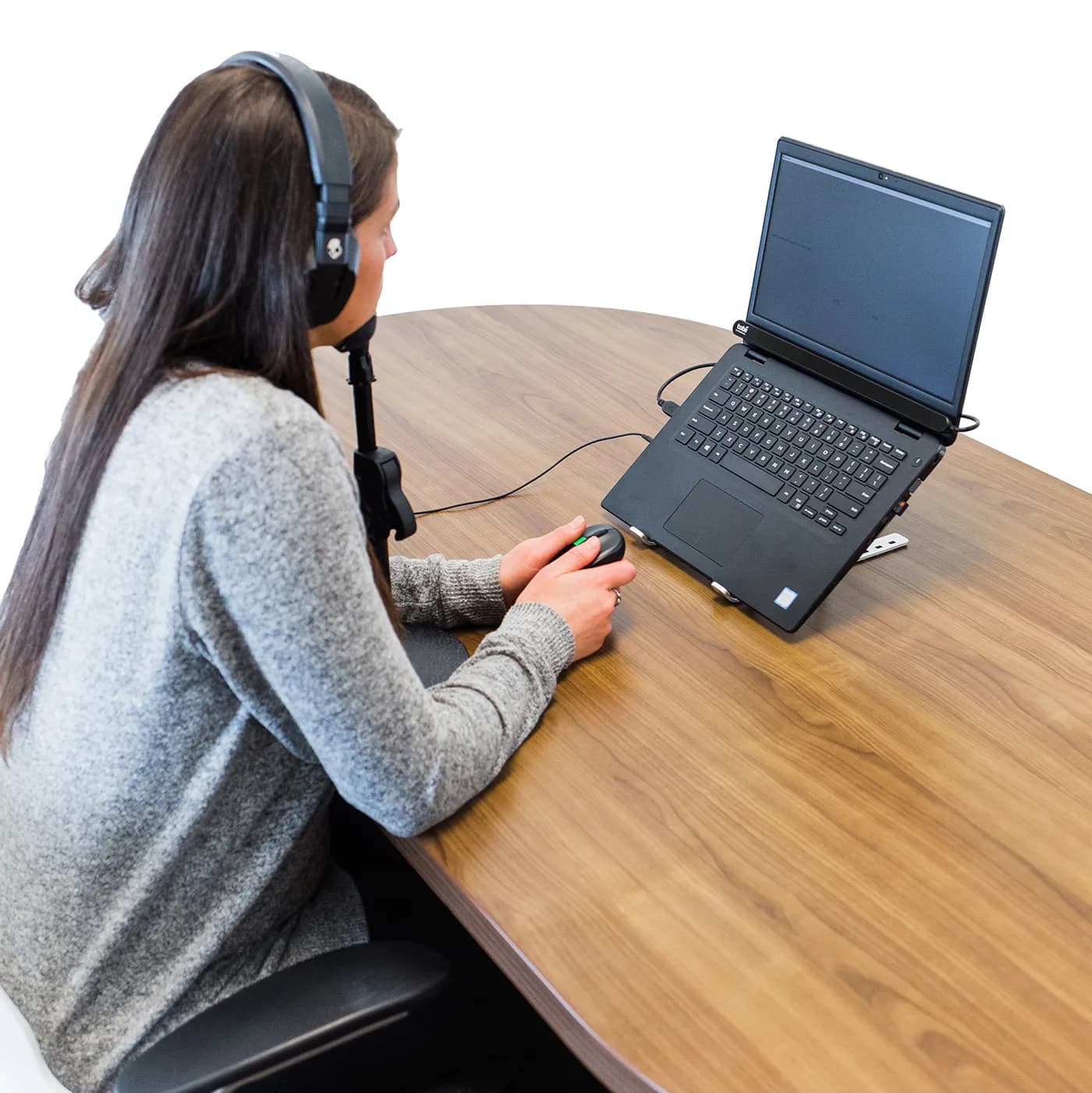
How to take the test in Monaco
We have no office in Monaco. We only work by travelling to the client with EyeDetect equipment or online via VerifEye.
Online today: VerifEye
You receive a link, the person takes the test from a phone in a quiet room, in 15–20 minutes. The PDF report comes within 5 minutes after the test, the examiner's explanation the same day. Suitable for fidelity checks and job candidates.
Specialist visit with EyeDetect
Visits are scheduled around requests: we collect several requests in the region and set a date. The test takes place in your office or a rented room. 6–8 people can be tested in a day.
How much will the test in Monaco cost?
Answer 5 short questions and a specialist will calculate the exact price of a visit or an online test and call you back. Free and with no obligation.
Common reasons to book a test
Theft or missing money
When several people are under suspicion, each of them answers the same questions. The result is not court evidence and is no substitute for reporting to the police.
Infidelity in a relationship
We check one specific suspicion: we draw up the questions together with you, and the person reads them in advance. The test is voluntary and requires written consent.
Job candidate or employee
Screening before hiring or during employment on agreed topics, such as theft at a previous job or ties to competitors.
Dispute without evidence
A debt, an agreement or an accusation where it is one person's word against another's: the test checks a specific version of events. The result is not court evidence.
Monte Carlo, Fontvieille and other quarters of Monaco
Monaco is a city-state, so there are no other towns in the country. The VerifEye online test can be taken from any quarter, and an EyeDetect visit covers the whole principality on the same terms: we set the date once several requests come in from the region. The specialist travels via Nice, so the same trip can include a test in Nice or Menton: the line 80 bus connects both of them to Monaco.
Monaco-Ville · Monte Carlo · La Condamine · Fontvieille · Larvotto · Moneghetti
Confidentiality guarantee for EyeDetect testing
We do not publish photos or videos of tests on our website or social media.
We do not discuss tests with colleagues in forums or chats.
We do not disclose any information about the companies or private clients we work with.
Questions about the test in Monaco
We have no office in Monaco, so there are two options. You can take the VerifEye online test today on your phone, in a quiet room at home or at work. The EyeDetect test takes place during a specialist visit, in your office, at your hotel or in a rented room in Monaco. The principality has no airport of its own, so the specialist flies to Nice, and from there the line 80 bus reaches the Place d’Armes stop in Monaco in 37–50 minutes.
VerifEye online test: UAH 2,500 (≈ €49) for one question, UAH 4,000 (≈ €78) for three, UAH 6,000 (≈ €116) for six, with no extra charges. EyeDetect with a visit: from UAH 10,000 (≈ €194) for one question and UAH 15,000 (≈ €291) for three, plus travel from Lviv and the venue. Prices are in hryvnias; euro amounts are approximate, at the NBU rate of 15.09.2026.
We plan trips to Monaco once several requests come in from the region, so we cannot tell you in advance how long the wait will be. Once the date is agreed, a specialist comes from Lviv with EyeDetect equipment, and the test takes place in your office, at your hotel or in a rented room. If you need an answer sooner, you can take the VerifEye online test today: the test takes 15–20 minutes, and the PDF report comes within 5 minutes after the test.
The fastest route is by bus and plane via Kraków. The bus from Lviv to Kraków airport takes 9 hours 20 minutes to 11 hours 25 minutes by timetable, and the ticket costs €26.49 (≈ UAH 1,365). The Wizz Air flight from Kraków to Nice takes 2 hours 20 minutes, and a one-way Basic ticket cost PLN 157–589 (≈ €36–136, or UAH 1,870–6,990) for dates from 17 September to 30 December 2026. From Nice airport to Monaco the line 80 bus takes 37–50 minutes: €21.40 at an agency or online, €21.80 on board. On a Friday this chain gives about 15 hours 10 minutes door to door: the bus from Lviv at 07:40, departure from Kraków at 18:30, arrival in Monaco at 21:52; this timetable runs until 23 October 2026. One way, that adds up to roughly UAH 4,300–9,500, plus luggage: the Wizz Air Basic fare includes only an under-seat bag, so space for 20 kg of equipment is bought separately. Without a flight there is a bus from Lviv to Nice with one change in Brno: 37 hours 25 minutes to 38 hours, with a one-way ticket at €92.98–125.98 (≈ UAH 4,790–6,490), then the same line 80 bus. By car it is about 1,907 km from Lviv and roughly 20.5 hours of pure driving, excluding stops and border queues. All amounts are one way; travel and the venue are paid separately from the test, and we will give you the exact round-trip amount once the dates are known.
Sources: Kraków Airport: flights to Nice · ZOU!: line 80 Nice — Monaco — Menton
Yes. The test checks one specific suspicion, for example infidelity over a certain period. The partner under suspicion takes it, or both partners take separate tests. The test is voluntary and requires written consent. The VerifEye online test costs from UAH 2,500 (≈ €49), and you do not need to wait for a visit.
You can take the test in Ukrainian, Russian, English or German. We do not run it in French, the official language of the principality. We draw up the questions together with you, and the person reads them in advance.
Monaco is not in the EU, so the GDPR does not apply here directly. Personal data is governed by Law No. 1.565 of 3 December 2024, published in the Journal de Monaco on 13 December 2024: it repealed Law No. 1.165 of 1993, and the supervisory authority is now the Personal Data Protection Authority (Autorité de Protection des Données Personnelles, APDP) instead of the CCIN. Monaco has no separate law on the polygraph, the lie detector or eye-movement testing. A search of the Legimonaco database for 'détecteur de mensonge' returned no results, and the word 'polygraphe' appears only in a medical fee schedule and in a collective agreement for the printing industries. The law is therefore silent on such tests, which is neither a permission nor a ban. The general rules apply. Article 22 of the Constitution of Monaco guarantees everyone the right to respect for private and family life. Article 5 of Law No. 1.565 lists consent as one of the grounds for processing data, and article 6 requires consent to be free, specific, informed and unambiguous; it must be as easy to withdraw as to give, and the party processing the data must be able to prove it. Article 7 bans the processing of special data, including health and biometric data, apart from exceptions such as explicit consent. We test only with written consent, and minors only with written consent from their parents and with the parents present. Several points in the law remain unclear. Article 2 treats as biometric only data that allows a person to be uniquely identified. So measuring eye movements to assess credibility does not, in our reading, fall under that definition. But if such data reveals something about a person's health, it may count as health data, which is special data. We found no APDP guidance on tests of this kind. The same article treats the automated assessment of a person's 'reliability' as profiling, and article 19 gives the right not to be subject to a decision taken solely by automated means, so a specialist always reviews the result. Article 80 restricts the processing of data on offences, convictions and 'suspicions of illicit activities' to a defined list of persons and bodies. So a test about a suspected theft may fall under that restriction, but the law gives no direct answer. Article 35 requires a data protection impact assessment for high-risk processing, and Ministerial Order No. 2025-361 of 14 July 2025 lists the risk criteria: profiling, automated decisions, systematic monitoring, special data, vulnerable persons and innovative technology. Processing that meets at least two criteria is presumed high-risk. Under articles 3 and 25, the law also covers those who work from abroad with people in Monaco, and requires a representative in Monaco or in an EU country. The exception is occasional processing without large-scale special data. The rules for employees and job candidates are stricter: the APDP treats employees as a vulnerable party, allows only job-related questions, bars fully automated recruitment and has already banned biometric working-time control, so talk to a lawyer before such a test. We found no Monegasque court decision on the admissibility of the lie detector: in a divorce case before the Tribunal de première instance on 17 January 2002 (No. 26925) the court merely recorded that a German psychologist had used a lie-detection method based on involuntary physiological reactions, but it did not assess that method and decided the case on other evidence. Our result is not court evidence. Monaco has also been a party to Council of Europe Convention No. 108 since 1 April 2009, and on 6 March 2025 it ratified the updated Convention 108+.
Sources: Law No. 1.565 on personal data protection · Constitution of Monaco, article 22 · APDP: human resources
Answers reviewed by Nataliia Marynyak, Certified EyeDetect Test Proctor and System Administrator (Converus). Updated .
Not sure where to start in Monaco?
A few short questions, and we will suggest the format, a visit to you or online, and give you a price.